
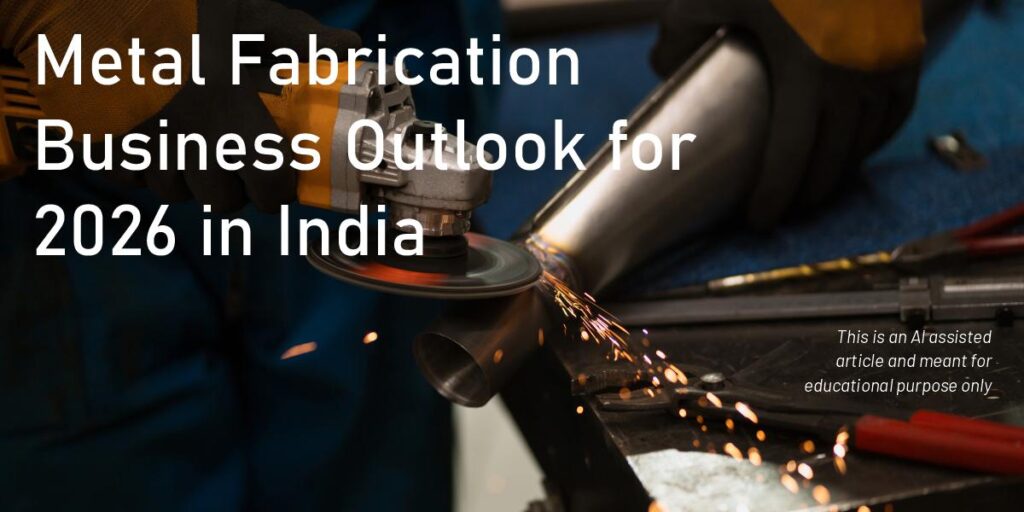
Metal Fabrication Business outlook for 2026 in India
Published on 10 November 2025
Table of Contents
Introduction
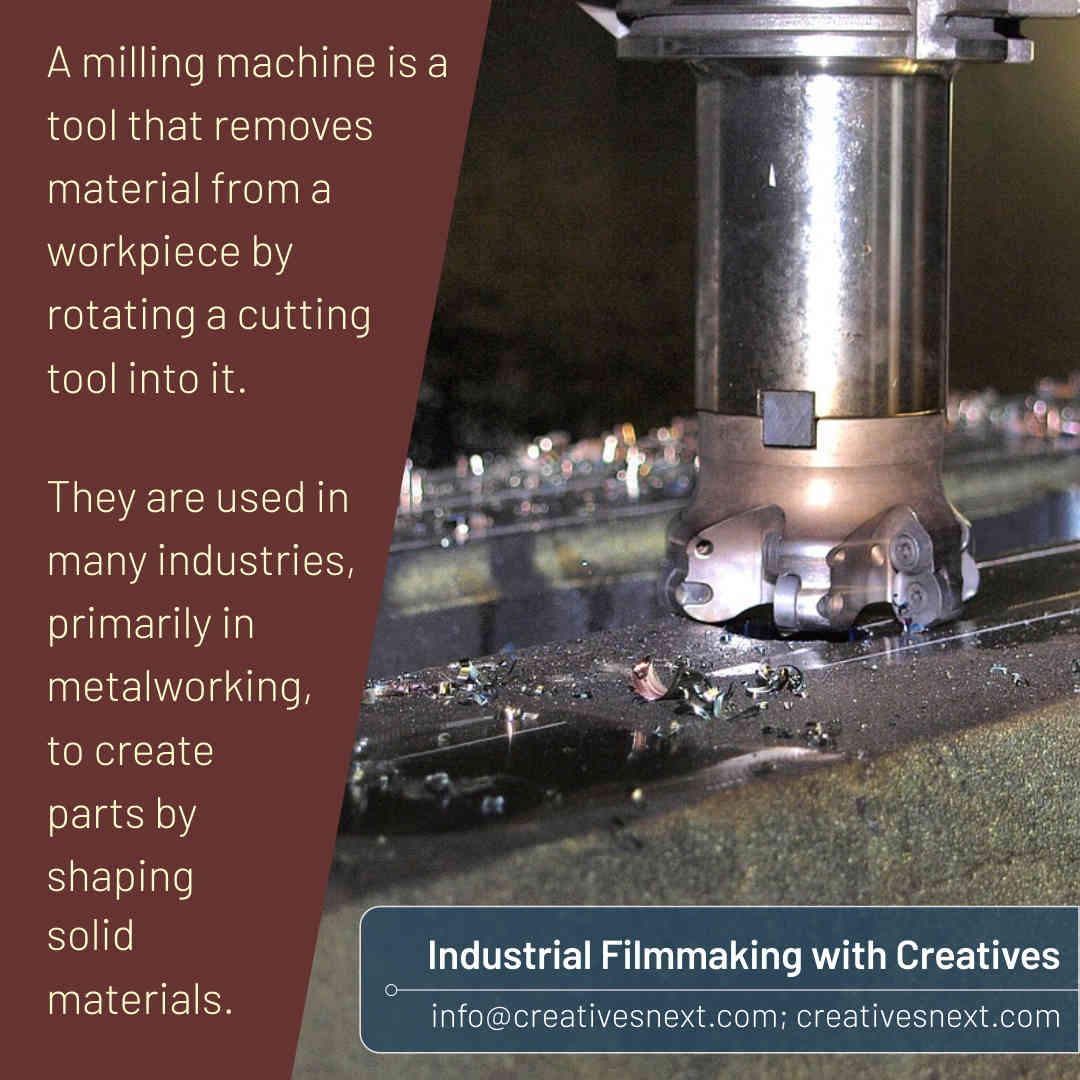
Metal Fabrication is a value added process where raw metals are cut, bent, milled and thermally treated to yield finished products. The process of metal fabrication is used across the industries to produce small parts to large structures.
This industry in India is poised for robust growth in 2026, fueled by massive government infrastructure spending, a booming manufacturing sector (notably in renewables and electronics), and strong domestic demand.
The outlook is cautiously optimistic.
While the demand pipeline is strong, businesses must navigate challenges like volatile raw material prices, intense competition, and the pressing need to adopt advanced technology to remain profitable and competitive.
Success will belong to those who specialize, automate, and embrace quality and sustainability.
Want to know more about Industrial Filmmaking within your Budget? Look here
1. Key Growth Drivers & Opportunities (The Bullish Case for 2026)
A. Government-Led Infrastructure Push
This is the single biggest driver.
- National Infrastructure Pipeline (NIP) & PM Gati Shakti: These initiatives focus on seamless multi-modal connectivity. This translates to huge demand for fabricated metal for:
- Railways: Wagons, coaches, tracks, station structures.
- Roads & Highways: Bridges, flyovers, signboards, crash barriers.
- Aviation: Airport terminals, hangars, ATC towers.
- Ports & Shipping: Cargo handling structures, containers.
B. The Renewable Energy Boom:
India’s commitment to 500 GW of renewable energy by 2030 creates a massive, sustained demand.
- Solar Power: Fabrication of solar module mounting structures (MMS) is a huge market. Demand will come from large utility-scale projects, commercial rooftops, and residential installations.
- Wind Power: Fabrication of towers, nacelles, and internal structures.
- Hydrogen & Biomass: Emerging sectors that will require specialized pressure vessels, tanks, and structural components.
C. “Make in India” & PLI Schemes:
The Production Linked Incentive (PLI) schemes are successfully attracting investment in specific sectors, directly benefiting fabricators.
- Electronics Manufacturing: Fabrication of chassis, enclosures, and support structures for smartphones, TVs, and IT hardware.
- Automotive & EV: While auto OEMs have in-house capabilities, Tier-2 and Tier-3 suppliers fabricate brackets, frames, and body panels. The EV revolution demands new designs for battery enclosures and charging station structures.
- White Goods (ACs, Washing Machines): Fabrication of cabinets, frames, and internal supports.
D. Defense Manufacturing:
The government’s push for indigenization in defense (Atmanirbhar Bharat) opens up opportunities for high-precision, high-integrity fabrication for:
- Naval vessels and submarines
- Military vehicle bodies
- Missile and radar housings
E. Construction & Real Estate:
The demand for commercial spaces (office parks, malls, data centers) and large-scale residential projects continues to drive the need for pre-engineered buildings (PEB), structural steel, and architectural metalwork (façades, railings, cladding).

2. Major Challenges & Headwinds for the Business
A. Volatile Raw Material Prices:
The cost of primary inputs like steel, aluminum, and copper is highly volatile and linked to global markets. This remains the biggest threat to profitability, making cost estimation and passing on increases to customers a complex task.
B. Intense Competition & Fragmentation:
The industry is highly fragmented, with a large number of small, unorganized players competing primarily on price. This leads to thin profit margins and makes it difficult for organized players to compete on cost for low-value projects.
C. Skilled Labor Shortage:
There is a significant gap in finding and retaining skilled workers like certified welders, CNC machine operators, and designers. This hampers productivity and quality, especially for complex projects.
D. Technological Adoption:
While large players are automating, a vast majority of small and medium fabricators still rely on manual processes. This affects consistency, speed, and the ability to take on high-precision work.
E. Working Capital Management:
Long credit cycles from large clients (especially in government and infrastructure projects) can strain the cash flow of small and medium-sized fabrication units.
F. Quality and Compliance:
As projects become more complex, adherence to international quality standards (e.g., AWS, EN) is becoming a prerequisite, not an option. Meeting these standards requires investment in technology, training, and certification.
3. Key Trends Shaping the Industry in 2026
- Automation & Industry 4.0: Adoption of CNC machines, robotic welding, laser cutting, and automated painting lines will increase to improve precision, reduce waste, and compensate for labor shortages.
- Digitalization: Use of ERP systems for project management, inventory control, and CRM. Building Information Modeling (BIM) will become more common for complex architectural and structural projects.
- Specialization is Key: General-purpose fabricators will struggle. Successful businesses will niche down into high-growth areas like:
- Precision fabrication for aerospace/defense.
- Specialized fabricators for food-grade or pharmaceutical-grade stainless steel.
- Experts in aluminum fabrication for railways or solar structures.
- Focus on Sustainability: There will be a growing emphasis on using recycled materials, optimizing designs to reduce weight (light-weighting), and implementing eco-friendly processes (like powder coating over liquid paint) to meet client ESG (Environmental, Social, and Governance) goals.
4. Strategic Recommendations for Metal Fabricators
To thrive in 2026, businesses should:
- Specialize and Differentiate: Don’t be a jack-of-all-trades. Identify a high-growth, high-margin niche (e.g., solar MMS, architectural metalwork, food processing equipment) and build expertise.
- Invest in Technology: Prioritize investment in at least one key area of automation (e.g., a CNC plasma table or a robotic welder) to boost productivity and quality.
- Upskill Your Workforce: Partner with industrial training institutes (ITIs) or set up in-house training programs to create a skilled and certified workforce.
- Embrace Digital Tools: Implement a basic ERP system to manage quotes, production schedules, inventory, and billing. This improves efficiency and provides data for better decision-making.
- Build a Strong Supply Chain: Forge strong relationships with reliable steel suppliers and sub-contractors to mitigate raw material price and availability risks.
- Focus on Quality and Certification: Obtain relevant quality certifications (e.g., ISO 3834 for welding) to become eligible for larger, more prestigious projects from multinational corporations and government tenders.
Conclusion
The metal fabrication industry in India stands at an inflection point in 2026. The demand outlook is exceptionally strong, driven by a confluence of favorable government policies and private sector investment. However, the path to profitability is fraught with challenges related to costs, competition, and capabilities.
The era of competing solely on low cost is ending. The future belongs to smart, specialized, and technologically adept fabricators who can deliver high-quality, precision-engineered products consistently. For businesses that can adapt, invest, and specialize, 2026 presents a year of significant growth and opportunity.
For more Industry Outlook, click here. This is a human crafted content, assisted by AI.